
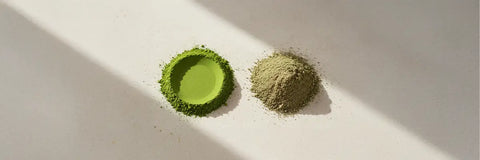
Porównując matcha i kratom, nie można stwierdzić, że są one do siebie podobne pod względem botanicznym, chemicznym ani pod względem profilu bezpieczeństwa.
Czy matcha to kratom? Nie. Matcha to japońska zielona herbata, której codzienne stosowanie sięga ponad 800 lat wstecz.
Kratom to liść tropikalnego drzewa zawierający zupełnie inny zestaw związków aktywnych.
Ludzie chcą wiedzieć, czy smakują podobnie, pachną podobnie lub wywołują podobne efekty. Odpowiedzi na wszystkie te pytania są jasne, a ten artykuł szczegółowo omawia każde z nich.
Matcha kontra Kratom: Ten sam kolor, zupełnie różne rośliny

Matcha to sproszkowana zielona herbata wytwarzana z liści Camellia sinensis , tej samej rośliny, z której produkuje się sencha , gyokuro i wszystkie inne japońskie zielone herbaty. Plantatorzy herbaty zacieniają rośliny przez trzy do czterech tygodni przed zbiorem, co zwiększa produkcję chlorofilu i L -teaniny, nadając matcha żywy, jadeitowozielony kolor. Po zbiorze liście są gotowane na parze, suszone i mielone na kamieniu na drobny, jedwabisty proszek.
Kratom pochodzi z Mitragyna speciosa, tropikalnego, wiecznie zielonego drzewa pochodzącego z Azji Południowo-Wschodniej. Należy do rodziny kawowców i rośnie głównie w Indonezji, Tajlandii i Malezji. Liście są zbierane, suszone na słońcu i mielone na proszek o barwie od matowej oliwkowej do brązowawej, w zależności od koloru nerwów. Należy jednak pamiętać, że kratom jest nielegalny lub ściśle regulowany w wielu krajach i regionach, dlatego jego stosowanie i sprzedaż w dużej mierze zależą od lokalnych przepisów.
Różne rodziny botaniczne, różne związki aktywne
Matcha zawiera kofeinę, L -teaninę, EGCG i szereg innych katechin. Związki te są dobrze przebadane i od dawna wykazują bezpieczeństwo stosowania przy typowym spożyciu. Kofeina i L -teanina razem dają poczucie czujności i spokoju, a nie gwałtowny wzrost i spadek energii, jak w przypadku kawy.
Głównymi związkami aktywnymi kratomu są mitraginina i 7-hydroksymitraginina. Te alkaloidy oddziałują z receptorami opioidowymi w mózgu, co sprawia, że mechanizm działania kratomu zasadniczo różni się od działania matcha czy jakiejkolwiek innej herbaty.
Profil smakowy Matcha vs Kratom

Czy Matcha smakuje jak kratom?
To jedno z najbardziej bezpośrednich pytań w porównaniu matcha i kratomu, a odpowiedź brzmi: zdecydowanie nie .
Te dwa proszki nie mają podobnego smaku i zrozumienie dlaczego tak się dzieje, pozwala na dokładne określenie różnic chemicznych między tymi roślinami.
Matcha ma trawiasty, roślinny smak z głębią umami i delikatną, naturalną słodyczą , szczególnie w przypadku matcha ceremonialnej z Uji lub Nishio . Goryczka jest subtelna i przyjemna, gdy proszek jest świeży i wysokiej jakości. Rozpuszcza się czysto w wodzie lub mleku, dając gładki, spieniony napój.
Kratom jest intensywnie gorzki i ma ostry, ziemisty smak, który większość użytkowników uważa za nieprzyjemny. Ta goryczka jest bezpośrednim skutkiem zawartości alkaloidów. Użytkownicy kratomu zazwyczaj mieszają proszek z sokiem pomarańczowym lub przyjmują go w kapsułkach, aby zamaskować smak.
Korzyści zdrowotne Matcha i kratomu
Obie rośliny mają właściwości pobudzające, dlatego dyskusja o matcha i kratomie pojawia się w kontekście energii i koncentracji. Ale na tym podobieństwa się kończą. Związki wywołujące te efekty, czas ich trwania i profil ryzyka są różne.
Matcha zapewnia spokój i długotrwałe skupienie dzięki połączeniu kofeiny i L -teaniny. Standardowa porcja 2-3 gramów zawiera około 60-70 miligramów kofeiny. Energia jest łagodna, zazwyczaj utrzymuje się od czterech do sześciu godzin, bez wyraźnego spadku energii po jej spożyciu.
Efekty działania kratomu zależą od dawki w sposób, w jaki nie ma ich matcha . Przy niskich dawkach, od 1 do 5 gramów, użytkownicy zazwyczaj zgłaszają stan pobudzenia przypominający stan pobudzenia. Przy wyższych dawkach, od 5 gramów wzwyż, kratom działa uspokajająco i powoduje zmiany nastroju ze względu na zwiększoną aktywność receptorów opioidowych. Matcha nie działa uspokajająco w żadnej rozsądnej dawce.
Ryzyko uzależnienia: Kofeina kontra Mitraginina
Uzależnienie od kofeiny może rozwinąć się przy regularnym spożywaniu matcha . Nagłe zaprzestanie picia może powodować łagodne bóle głowy lub zmęczenie przez kilka dni. Jest to dobrze poznana i łatwa do opanowania forma uzależnienia, która dotyka osoby regularnie pijące kawę i herbatę na całym świecie.
Uzależnienie od kratomu wiąże się z wiązaniem mitragininy z receptorami opioidowymi. Objawy odstawienia zgłaszane przez regularnych użytkowników obejmują bóle mięśni, drażliwość, nudności i lęk. FDA odradza stosowanie kratomu i nadal aktywnie monitoruje jego profil bezpieczeństwa.
Status prawny: Matcha nie podlega ograniczeniom, Kratom nie
Matcha jest legalnie dostępna w każdym kraju i traktowana jak standardowy produkt spożywczy. Nie ma żadnych ograniczeń wiekowych, żadnych przepisów ani komplikacji prawnych związanych z jej zakupem i spożyciem.
Kratom jest zakazany lub kontrolowany w kilku stanach USA, w tym w Alabamie, Arkansas, Indianie, Rhode Island, Vermont i Wisconsin, a także w wielu krajach, w tym w Tajlandii, Australii i kilku krajach europejskich. Sytuacja prawna dotycząca kratomu stale ewoluuje i znacznie różni się w zależności od lokalizacji.
Jak metody przygotowania odzwierciedlają charakter każdej rośliny
Matcha przygotowuje się za pomocą bambusowej trzepaczki i ceramicznej miseczki, podgrzewając wodę do temperatury około 70-80 stopni Celsjusza. Proszek jest przesiewany i ubijany w gładkie, spienione piwo w niecałe dwie minuty. Rytuał ten jest praktykowany w Japonii od wieków i jest związany z tradycjami medytacji buddyjskiej zen.
Kratom rozpuszcza się w wodzie lub soku, a także przyjmuje w kapsułkach. Nie ma porównywalnego rytuału przygotowania i nie rozpuszcza się tak czysto. Jeśli ciekawi Cię, jak wygląda tradycyjne parzenie matcha , przewodnik NioTeas po ceremonialnym parzeniu omawia temperaturę wody, technikę ubijania oraz różnice między usucha a koicha.
Dla kogo właściwie jest każda roślina

Kiedy ludzie porównują matcha z kratomem, aby zdecydować, co dodać do swojej rutyny dbania o zdrowie, praktyczne porównanie sprowadza się do tego, co każda z roślin faktycznie robi przy typowej dziennej dawce.
Matcha to praktyczny, codzienny napój dla każdego, kto chce mieć czystą energię, utrzymać koncentrację i być sprawdzonym źródłem przeciwutleniaczy bez komplikacji prawnych, ryzyka uzależnienia lub niepewności regulacyjnej.
Kratom przyciąga użytkowników poszukujących efektów wykraczających poza to, co oferuje każda herbata: uśmierzania bólu, wsparcia w odstawieniu opioidów czy intensywnych zmian nastroju. Jego stosowanie wymaga znacznie większej ostrożności pod względem pozyskiwania, dawkowania i znajomości lokalnych przepisów.
Matcha to dogłębnie przebadany, powszechnie dostępny napój do codziennego użytku. NioTeas pozyskuje swoją kolekcję matcha bezpośrednio od japońskich producentów, zapewniając możliwość śledzenia jej pochodzenia aż do konkretnych regionów uprawy.



Komentarze (0)
Brak komentarzy do tego artykułu. Bądź pierwszą komentującą osobą!